How to Test Hair Porosity at Home?
Testing your hair porosity at home is simpler than you might think. It involves just a few easy steps that can reveal a lot about your hair’s health and maintenance needs. By understanding your hair porosity, you can choose the right products and routines for ideal care. Curious about how to conduct the test and what the results mean for your hair care regimen? Let’s explore this further.
How To Test Hair Porosity At Home
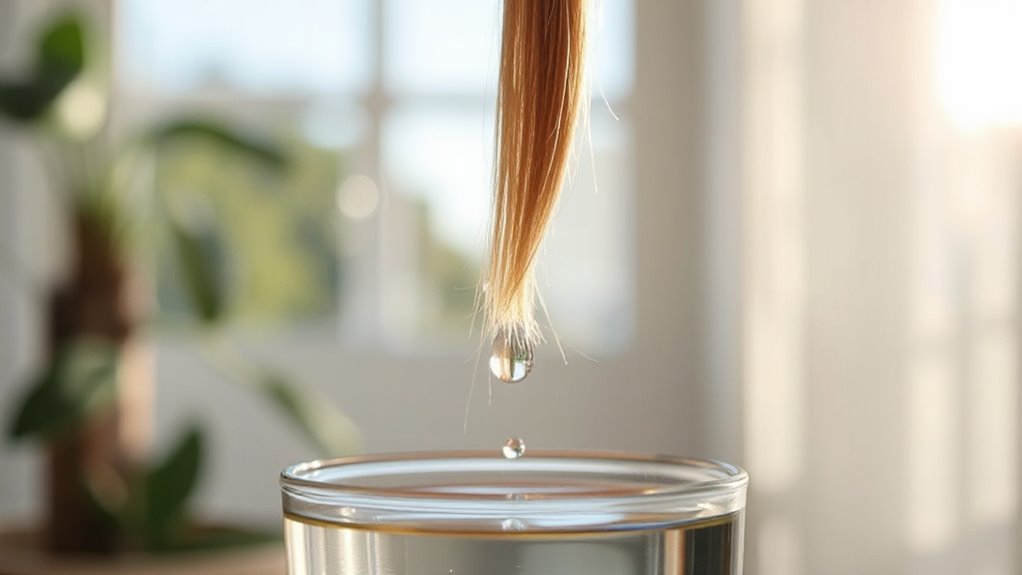
Wondering how to test your hair porosity at home? It’s simple! Grab a clean strand of hair and fill a glass with water.
Drop the hair into the water and observe what happens. If it sinks quickly, your hair has high porosity. If it floats for a while before sinking, you’ve got medium porosity. If it remains on top, your hair is low porosity.
This quick test helps you understand how your hair absorbs moisture and products. Remember, testing with multiple strands can give you a more accurate idea of your overall hair porosity.
Happy testing!
What Is Hair Porosity And Why Does It Matter?
Understanding hair porosity is key to effective hair care.
Hair porosity refers to your hair’s ability to absorb and retain moisture. It’s determined by the structure of your hair cuticles—whether they’re tightly packed, slightly raised, or widely spaced.
If your hair has low porosity, it struggles to absorb moisture but retains it well. High porosity hair absorbs moisture easily but loses it quickly.
Knowing your hair’s porosity helps you choose the right products and routines. This can prevent damage, enhance moisture retention, and promote healthy hair growth, making your hair care routine more effective and tailored to your unique needs.
How Is Hair Porosity Tested At Home?
Testing your hair porosity at home is a simple and effective way to customize your hair care routine.
You can easily determine your porosity level using the following steps:
- Strand Test: Take a clean, dry hair strand and place it in a glass of water. Observe how quickly it sinks or floats.
- Water Drip Test: Drip water on a section of your hair. Notice if it absorbs quickly or beads up.
- Texture Check: Run your fingers down a wet strand. If it feels rough or catches, you may have high porosity.
These methods help you understand your hair’s unique needs!
What Are The Different Hair Porosity Levels?
Hair porosity levels play an essential role in determining how your hair absorbs and retains moisture.
There are three main porosity levels: low, medium, and high. If you have low porosity hair, your cuticles are tightly packed, making it hard for moisture to enter.
Medium porosity hair has a looser cuticle structure, allowing for balanced moisture absorption and retention.
High porosity hair, on the other hand, has gaps and holes in the cuticles, leading to quick absorption but also rapid moisture loss.
Knowing your hair’s porosity helps you choose the right products and care methods for healthy, hydrated hair.
Why Does Hair Porosity Affect Hair Health?
Since porosity determines how well your hair absorbs and retains moisture, it greatly impacts your overall hair health.
Understanding your hair’s porosity helps you tailor your care routine effectively.
Here’s how porosity affects your hair:
- Moisture Retention: High porosity hair often loses moisture quickly, leading to dryness and frizz.
- Product Absorption: Low porosity hair might struggle to absorb products, causing buildup and weighing it down.
- Structural Integrity: Medium porosity hair typically maintains a healthy balance, promoting shine and elasticity.
How To Identify Your Hair Porosity Type?
How can you determine your hair’s porosity type?
Start by examining how your hair reacts to moisture. If your hair absorbs water quickly and feels saturated, you likely have high porosity. If it takes a while to soak up water but eventually does, you probably have medium porosity.
On the other hand, if your hair resists moisture and takes a long time to get wet, you may have low porosity.
Additionally, consider how well products penetrate your hair; high porosity often absorbs products easily, while low porosity may leave products sitting on the surface.
Understanding this helps tailor your hair care routine.
What Products Work Best For Each Hair Porosity Level?
Understanding your hair porosity type sets the stage for choosing the right products that cater to your specific needs. Here’s a quick guide:
- Low Porosity: Use lightweight oils and products with humectants, like aloe vera, to avoid buildup.
- Medium Porosity: Opt for balanced moisturizers and proteins. Creams that hydrate without weighing your hair down work best.
- High Porosity: Choose heavier oils and butters, such as shea butter or coconut oil, to seal moisture effectively.
How Often Should You Test Your Hair Porosity?
While you might think testing your hair porosity is a one-time task, it’s actually beneficial to reassess it periodically. Changes in your hair’s health, environment, or product usage can affect porosity.
Aim to test your hair every few months or whenever you notice shifts in its texture or moisture retention. Seasonal changes can also impact porosity, so consider testing when the seasons change.