How to Glue Wigs Properly at Home?
Gluing wigs at home can seem intimidating, but with the right approach, you can achieve a secure and natural look. It’s vital to understand the importance of preparation before applying any adhesive. By following a few simple steps, you can guarantee your wig stays in place and looks great. Curious about the best adhesive options and techniques to make your wig last longer? Let’s explore the essentials together.
How To Glue Wigs Properly At Home
When you want to achieve a flawless wig application at home, knowing how to glue wigs properly is essential.
Start by prepping your natural hair and scalp. Make sure your hair is clean and dry.
Then, place a protective barrier like a wig cap or scalp protector.
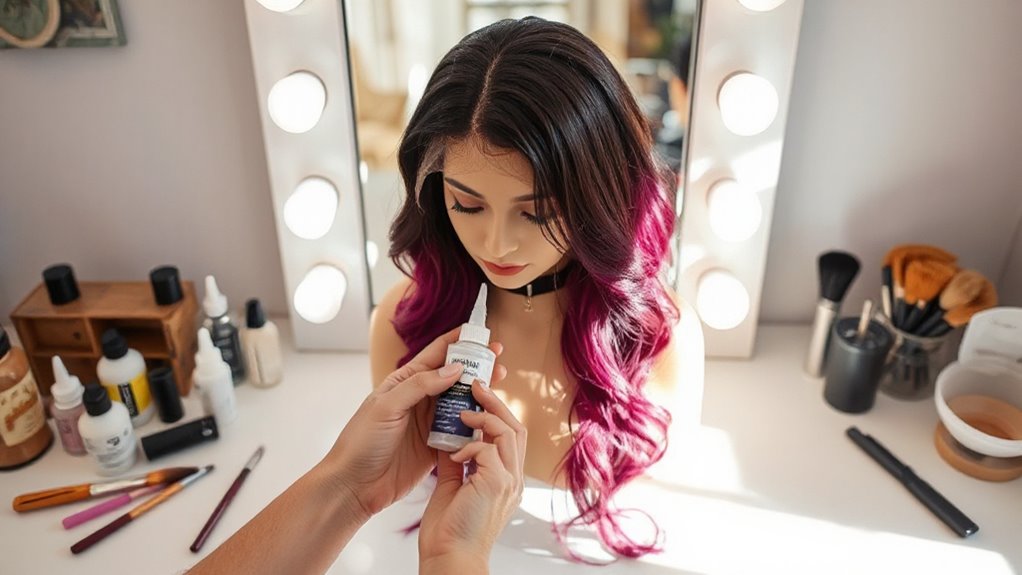
Apply a thin layer of adhesive along your hairline, ensuring even coverage.
Wait a few moments for it to become tacky, then carefully position the wig, pressing it down firmly.
Secure it by holding the edges for a minute.
Finally, check for any gaps and smooth everything out for a seamless finish.
What Types Of Wig Adhesives Can You Use?
Choosing the right adhesive is essential for securing your wig effectively. You’ve got several options.
Liquid adhesives are popular for their strong hold, perfect for long-term wear. If you prefer something less messy, tape adhesives offer an easy, quick application and removal.
You might also consider wig glue specifically designed for sensitive skin, ensuring comfort without irritation. For a more temporary solution, wig clips can be a great choice, allowing you to easily attach and remove your wig.
Each type of adhesive has its pros and cons, so think about your needs before making a decision.
Why Is It Important To Clean Your Skin Before Gluing?
Cleaning your skin before gluing is essential for ensuring a strong and secure bond between the adhesive and your scalp.
When you take the time to cleanse, you’re not just prepping your skin; you’re also enhancing the longevity of your wig.
Here’s why it matters:
- Removes excess oils that can weaken adhesive.
- Eliminates dirt and sweat, preventing irritation.
- Reduces the risk of allergic reactions from residue.
- Promotes better adhesion, allowing for a more natural look.
How To Prepare Your Hair For Wig Application
After ensuring your skin is clean, it’s time to focus on your hair to create the best foundation for wig application.
Start by brushing your hair to remove any tangles. If your hair is long, consider braiding it or tying it into a low bun to keep it flat.
If you have short hair, use a wig cap to smooth it down. Make sure your hair is dry and free of products, as residue can affect the wig’s fit.
Finally, if needed, use a light hairspray to help keep everything in place before applying your wig.
What Are The Step-By-Step Instructions For Gluing Wigs?
Once you’ve prepared your hair, it’s time to get started with gluing your wig properly.
Follow these step-by-step instructions for a secure fit:
- Clean your hairline with alcohol to remove oils.
- Apply a thin layer of wig adhesive along your natural hairline.
- Wait a few minutes for the glue to become tacky.
- Carefully position the wig, pressing it down at the front first, then smoothing it back.
How To Make Your Wig Last Longer Once Glued?
To keep your wig looking fresh and secure after applying the adhesive, proper maintenance is key.
Start by avoiding excessive heat and moisture; always wear a breathable cap underneath.
When washing, use a gentle sulfate-free shampoo and cool water to prevent loosening the glue. Avoid rubbing the wig; instead, gently pat it dry.
Store your wig on a wig stand to maintain its shape and avoid tangling.
If you notice any lifting, use a touch-up adhesive only on affected areas.
Finally, limit styling with heat tools to prolong the integrity of both the wig and the adhesive.
What Common Mistakes Should You Avoid When Gluing?
What pitfalls should you steer clear of when gluing your wig? Avoiding common mistakes can make a big difference in your wig-wearing experience. Here are some key points to keep in mind:
- Don’t skip the skin prep; clean your scalp to guarantee better adhesion.
- Avoid excessive glue; too much can lead to messiness and discomfort.
- Don’t rush the drying process; let the adhesive set properly for a secure fit.
- Skip using incompatible products; choose adhesive specifically designed for wigs to prevent damage.
How To Remove Wig Adhesive Safely And Effectively?
After avoiding common mistakes while gluing your wig, it’s important to know how to remove the adhesive safely and effectively.
Start by gathering a gentle adhesive remover or oil, like coconut or olive oil. Apply it to the adhesive area using a cotton ball, letting it sit for a few minutes. This softens the glue.
Gently wiggle the wig to loosen it, and carefully peel it away. If needed, reapply the remover to stubborn spots.
Finally, wash your scalp with mild soap to remove any residue. Always be gentle to avoid irritation or damage to your skin.