How to Bleach Hair Safely at Home?
Bleaching your hair at home can be a straightforward process if you take the right precautions. It’s essential to gather the necessary supplies and follow the correct steps to avoid damage. You’ll also need to understand the importance of a patch test. Curious about how to achieve that perfect shade while keeping your hair healthy? Let’s explore the crucial aspects of bleaching safely and effectively.
How To Bleach Hair Safely At Home
When you decide to bleach your hair at home, it’s essential to follow safety precautions to avoid damage.
Start by wearing gloves to protect your skin and a shirt you don’t mind ruining. Make sure your workspace is well-ventilated to reduce inhalation of fumes.
Always do a patch test 48 hours prior to application, checking for allergic reactions. Keep the bleach mixture off your scalp to prevent burns.
Use a timer to monitor the processing time; don’t exceed recommended limits.
Finally, have a plan for rinsing and conditioning afterward to restore moisture and minimize potential damage.
What Supplies Do You Need To Bleach Hair?
To successfully bleach your hair at home, you’ll need a few essential supplies.
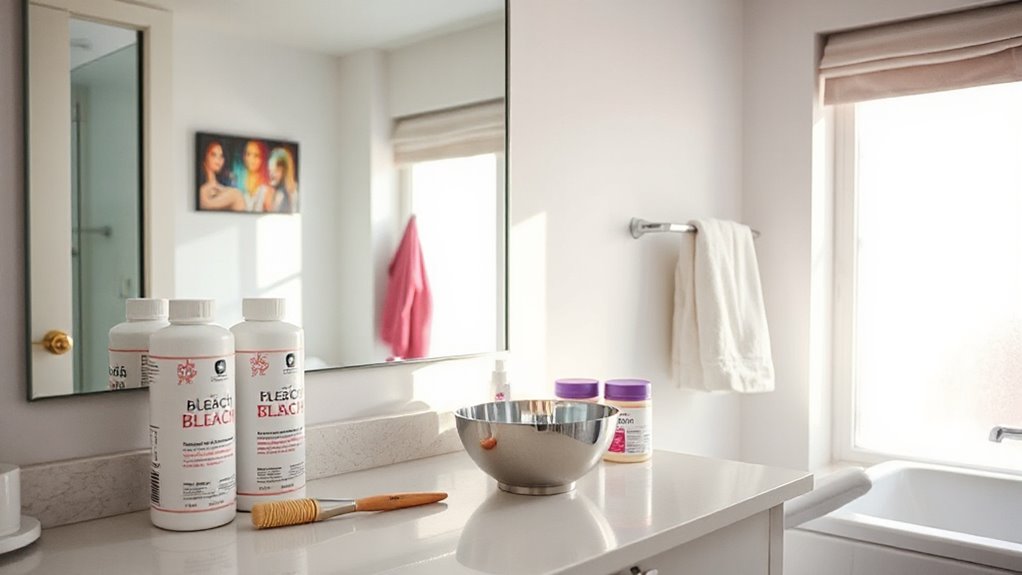
First, grab a quality hair bleach kit, which typically includes bleach powder and developer. You’ll also need gloves to protect your hands, a bowl for mixing, and a brush for application.
Don’t forget an old towel or cape to shield your clothes. A wide-tooth comb can help detangle your hair beforehand.
Finally, have a timer handy to keep track of processing time. With these supplies ready, you’re set to start your hair bleaching journey safely and effectively.
How Long Should You Leave Bleach In Your Hair?
How long should you leave bleach in your hair for the best results?
Typically, you should aim for 20 to 45 minutes, depending on your hair type and the desired level of lift.
Start checking your hair after 20 minutes. If it’s not lightening as you hoped, you can leave it in for a bit longer, but don’t exceed 45 minutes.
Keep in mind that over-processing can lead to damage, so it’s essential to monitor your hair’s condition.
Always follow the product instructions, as different brands may have specific recommendations for timing and application.
What Steps Should You Follow To Bleach Hair Safely?
After determining the right timing for bleaching, it’s important to follow specific steps to secure safety and achieve the desired results.
Start by gathering your supplies: bleach, developer, gloves, and an applicator brush.
Section your hair to ensure even application. Apply the bleach carefully, starting from the ends and working towards the roots.
Monitor the time closely, checking your hair’s progress regularly. Once you reach the desired lightness, rinse thoroughly with cool water and follow up with a deep conditioner.
Finally, avoid washing your hair for a few days to let the color settle and maintain its vibrancy.
Why Is A Patch Test Important Before Bleaching?
Before you plunge into bleaching your hair, conducting a patch test is essential to avoid potential allergic reactions. This simple step helps you determine if your skin will react negatively to the bleach.
Apply a small amount of the product behind your ear or on your inner elbow, then wait 48 hours. If you notice redness, itching, or swelling, don’t proceed with bleaching.
Even if you’ve used similar products before, your skin can change. A patch test protects you from uncomfortable side effects and guarantees a smoother bleaching process.
Prioritizing this test can save you from unnecessary complications later on.
How To Care For Your Hair After Bleaching
Once you’ve bleached your hair, it’s essential to give it the care it deserves to keep it healthy and vibrant.
Start by using a sulfate-free shampoo and a rich conditioner to hydrate and repair your strands. Incorporate a deep conditioning treatment once a week for extra moisture.
Limit heat styling to prevent further damage, and always use a heat protectant when you do. Trim your ends regularly to keep your hair looking fresh.
Ultimately, avoid washing your hair too often to maintain its natural oils.
With proper care, your bleached hair can remain gorgeous and full of life.
What Are Common Mistakes To Avoid When Bleaching Hair?
When you decide to bleach your hair at home, it’s crucial to avoid common mistakes that can lead to damage or undesirable results.
First, don’t skip the patch test—this helps you avoid allergic reactions.
In addition, avoid using a higher volume developer than necessary; it can cause excessive damage.
Make sure your hair is clean but not freshly washed; natural oils protect your scalp.
Don’t rush the process; follow the recommended timing for even results.
Finally, don’t ignore aftercare. Use nourishing products to maintain your hair’s health post-bleaching.
Are There Alternatives To Traditional Hair Bleach?
Wondering if there are alternatives to traditional hair bleach? You might want to take into account semi-permanent hair color, which can lighten and add vibrancy without the harsh effects of bleach.
Natural options like chamomile tea or honey can also lighten your hair gradually and safely. If you’re looking for a temporary change, try color-depositing shampoos that enhance your current shade.
For a more subtle approach, highlights using foils or balayage techniques let you brighten your locks while maintaining your natural color.
Always remember to do a patch test, regardless of the method you choose, to make sure your hair stays healthy.