How to Stop Chlorine Damage in Hair?
Chlorine can wreak havoc on your hair, leaving it dry and damaged after a swim. You might not realize just how much it affects your locks until it’s too late. But don’t worry, there are effective strategies to shield your hair from chlorine’s harsh effects. From pre-swim preparations to post-swim care, you can take action to protect and repair your strands. So, what steps can you take to keep your hair healthy and vibrant?
How To Stop Chlorine Damage In Hair: Essential Tips And Tricks
If you’re spending time in chlorinated pools, it’s crucial to take steps to protect your hair from damage.
Start by wetting your hair with fresh water before diving in; this helps reduce chlorine absorption. Consider using a swim cap for extra protection.
After swimming, rinse your hair immediately to wash away chlorine. Use a clarifying shampoo once a week to eliminate buildup.
Deep conditioning treatments can restore moisture and repair damage. Finally, applying a leave-in conditioner or hair oil before swimming creates a barrier, minimizing chlorine’s effects.
With these tips, you can enjoy the pool without sacrificing your hair’s health.
What Causes Chlorine Damage In Hair?
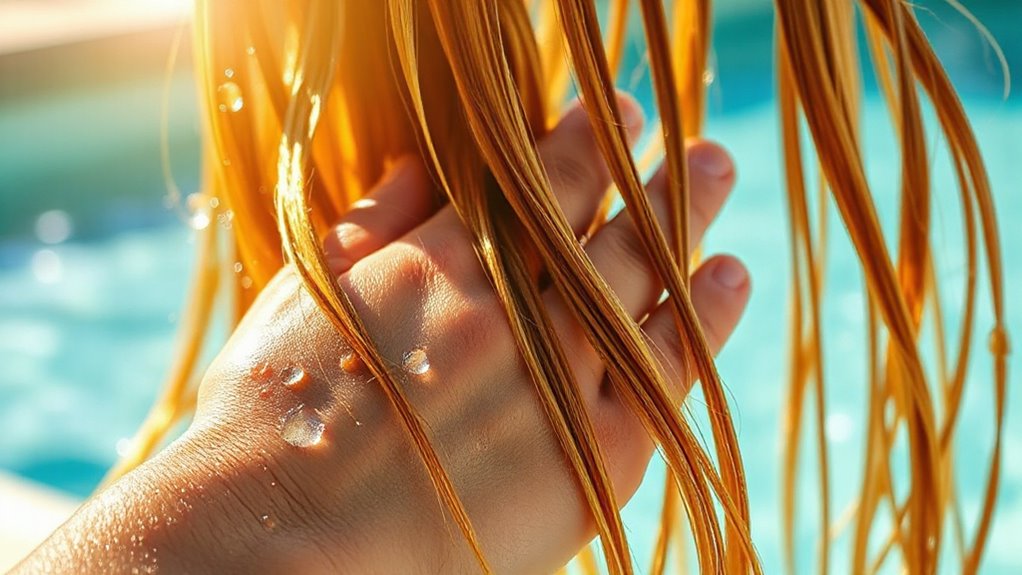
Chlorine damage in hair occurs primarily because chlorine is a harsh chemical that strips moisture and natural oils.
When you swim in chlorinated water, your hair can suffer in several ways:
- Dryness: Chlorine pulls moisture from your hair, leaving it dry and brittle.
- Color Fading: If you’ve dyed your hair, chlorine can cause your color to fade faster.
- Split Ends: The lack of moisture leads to split ends and breakage.
- Texture Changes: Chlorine can alter your hair’s natural texture, making it feel rough and unmanageable.
Being aware of these causes can help you take preventive measures.
Why Is Chlorine Harmful To Your Hair Health?
Swimming in chlorinated water may feel invigorating, but it can wreak havoc on your hair’s health. Chlorine strips your hair of its natural oils, leaving it dry and brittle.
This harsh chemical can also break down the protein structure of your hair, making it weak and prone to breakage. Additionally, chlorine can lead to discoloration, especially for those with color-treated hair, resulting in a dull, lifeless appearance.
If you don’t take precautions, you might find your locks feeling rough and looking unhealthy. Understanding this damage is essential for maintaining vibrant, strong hair as you enjoy your time in the pool.
How Can You Protect Your Hair From Chlorine Before Swimming?
To keep your hair healthy while enjoying a swim, it’s essential to take protective measures beforehand.
Here are four effective ways to shield your locks from chlorine damage:
- Wet Your Hair: Rinse your hair with fresh water before diving in. This helps reduce chlorine absorption.
- Use a Leave-In Conditioner: Apply a leave-in conditioner to create a barrier against chlorine.
- Wear a Swim Cap: A swim cap can protect your hair from direct exposure to chlorine.
- Avoid Hair Products: Skip styling products before swimming; they can interact negatively with chlorine.
Taking these steps guarantees your hair stays vibrant and healthy!
What Should You Do Immediately After Swimming To Minimize Damage?
After a revitalizing dip, it’s essential to act quickly to protect your hair from chlorine damage.
Rinse your hair thoroughly with fresh water right away; this helps remove chlorine and prevent it from settling in. If you have a swimmer’s shampoo, use it to cleanse your hair further.
Follow up with a deep conditioner to restore moisture. Avoid heat styling for the day, letting your hair air dry instead.
If you’re at home, consider applying a leave-in conditioner or hair oil for extra protection.
These steps will help keep your locks healthy and vibrant after swimming.
How To Repair Chlorine-Damaged Hair Effectively?
Rinsing and conditioning your hair right after a swim is just the first step in tackling chlorine damage.
To effectively repair chlorine-damaged hair, follow these steps:
- Deep Condition: Use a rich, moisturizing deep conditioner weekly to restore moisture.
- Trim Regularly: Get regular trims to remove split ends and promote healthy growth.
- Use Oils: Apply natural oils like coconut or argan oil to nourish and protect your strands.
- Limit Heat: Avoid heat styling tools as much as possible to prevent additional damage.
Are There Specific Products That Help Prevent Chlorine Damage?
Wondering how to shield your hair from chlorine damage? You can start by using a protective leave-in conditioner specifically designed for swimmers.
These products create a barrier against chlorine, keeping your hair safe. Additionally, look for shampoos and conditioners that contain ingredients like aloe vera or coconut oil, which help hydrate and protect your strands.
A pre-swim spray can also be effective; it coats your hair before you plunge in, reducing chlorine absorption.
Finally, consider wearing a swim cap for extra protection. With the right products, you can enjoy the pool without worrying about damaging your hair.
What Are The Best Home Remedies For Treating Chlorine-Damaged Hair?
How can you effectively restore your hair after chlorine exposure? You can try these simple home remedies to bring your locks back to life:
- Coconut Oil: Apply warm coconut oil before swimming to create a protective barrier.
- Apple Cider Vinegar: Rinse your hair with a mix of apple cider vinegar and water to restore pH balance.
- Aloe Vera: Massage fresh aloe vera gel into your scalp for moisture and nourishment.
- Honey and Olive Oil: Combine honey and olive oil for a hydrating hair mask, leaving it on for 30 minutes.
These remedies can help rejuvenate your hair!